

10.12.2025
Contributions from Cheerful Twentyfirst’s Georgina Burrows, Head of Strategy and Pete Starling, Creative Director
Art Basel Miami isn’t just an art fair – it’s a pressure cooker for brand expression and creative culture.
A week where the city runs on equal parts vitamin D, neon, and adrenaline; where the art world’s most serious collectors rub shoulders with the see-and-be-seen party crew, where creatives re-energise; and where brands jostle to out-shine, out-scale and out-story one another.
It’s absurd, it’s brilliant and (as our strategy and creative leads found), it’s a golden activation opportunity.
“If you’re a baker, making bread, you’re a baker. But if you bake the bread in the gallery, you’re an artist. So the context makes the difference.”
—Marina Abramović.
The week was full of brand spectacles — glowing installations, choreographed pop-ups, influencers moving in flocks — yet many activations drifted through the week feeling oddly unmoored; context-free zones in a place where framing should be everything.
The question we kept circling back to was: who exactly is all this for? What’s the grand ‘why’? Do we actually know our audience—or are we all just flinging budgets into the Miami breeze and hoping for the best?
Attention Is Easy.
Engagement Is Hard.
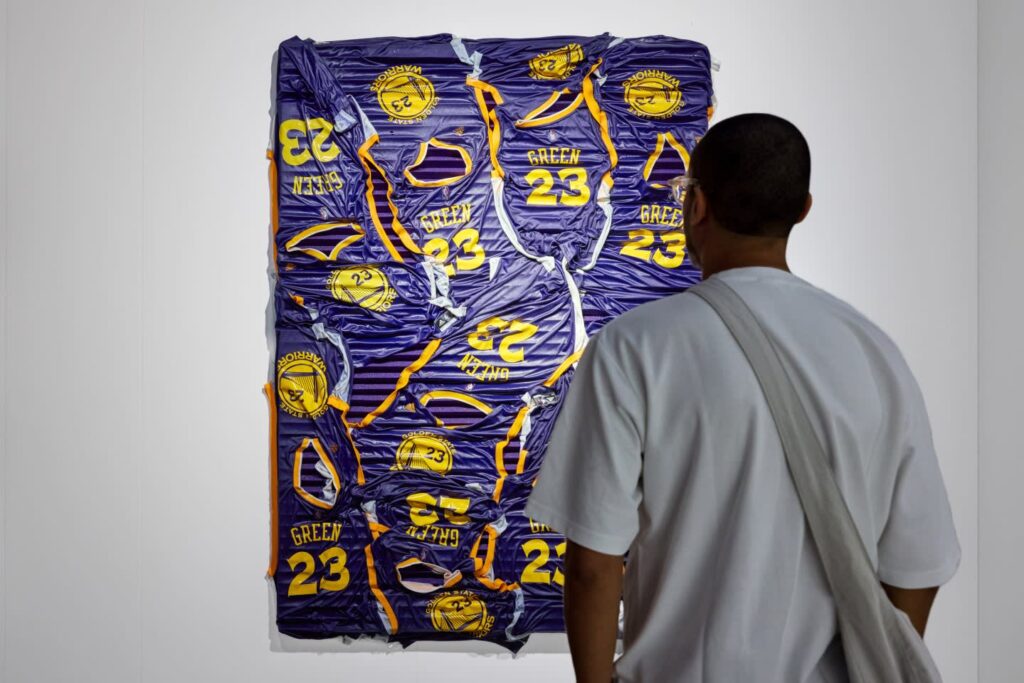
Basel’s gravitational pull is its chaos. The sidewalk robots, Wynwood murals, the beachside architecture, the late-night queues. It’s a place that already overstimulates. So the trick isn’t getting noticed. It’s staying relevant and deepening the experience once someone actually steps inside your space.
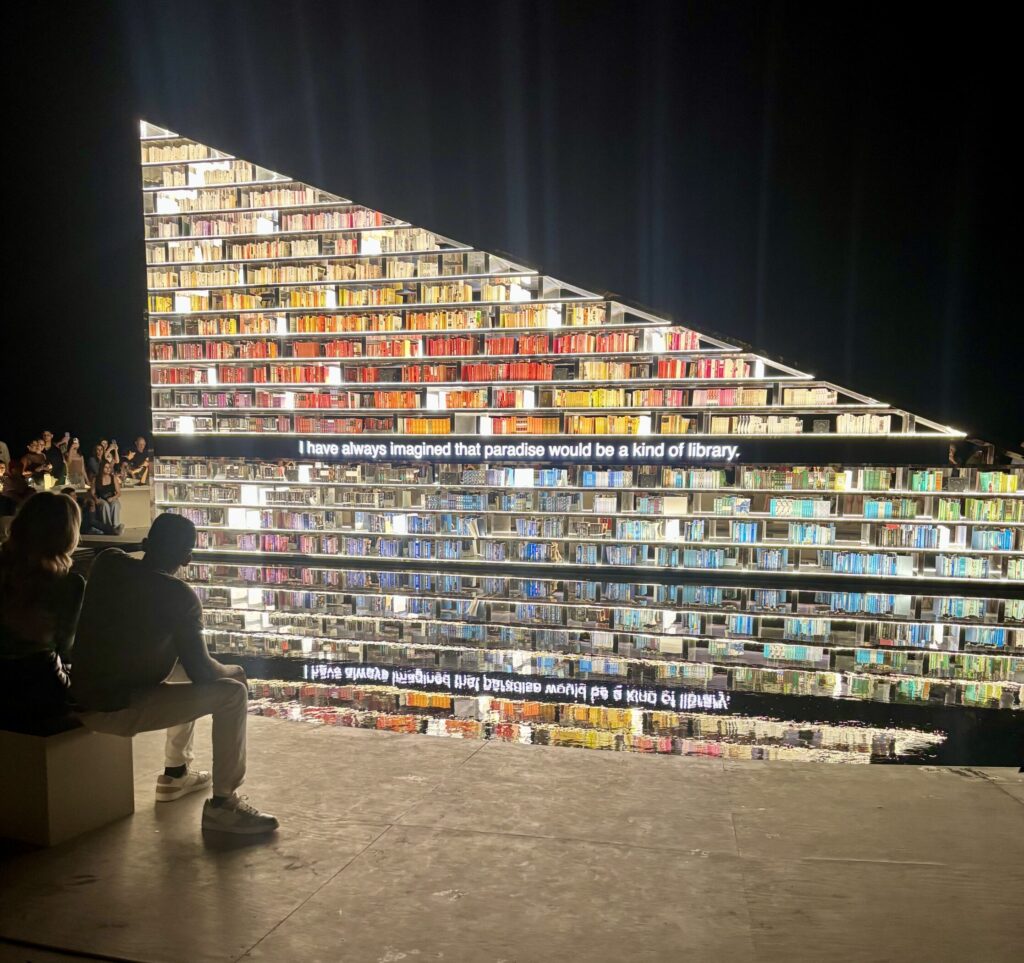
Es Devlin achieved this by offering something radical: a moment that asked for reflection, not just reaction. A 20-foot rotating library of the books that have shaped her work, glowing like a lighthouse for the creatively curious. Guests could step onto the turning structure as Devlin’s voice spoke lines from each book—light dancing across the water, the concept disarmingly simple yet utterly mesmerising. An activation that didn’t just stand out; it sang!
“Es Devlin was one of the few activations not trying to sell us anything, apart from inspiration. The experience felt true to the artistic spirit that others were trying to emulate.
For many brands, that’s where things fell apart. We saw big-budget builds that delivered the visual “wow” but failed to spark genuine connection. Shiny surfaces with no supporting story.”
Georgina Burrows
Take Tom Ford, who dropped serious spend on a very glamorous beachside pop-up shop. Basel’s well-heeled crowd is perfectly positioned to splash out on £400-plus sunglasses but what’s the actual return here, beyond a few sandy selfies and some lightly sunburnt brand managers? Cultural relevance? Borrowed brand equity from the prestige that comes with an association with Basel?
Know Your Tribes.
And Design for Them.
Basel isn’t one audience; it’s two occasionally overlapping worlds… but they’re playing different games. Collectors who want exclusivity, intelligence, and access. Party-set visitors who want to document the moment and broadcast themselves inside it.
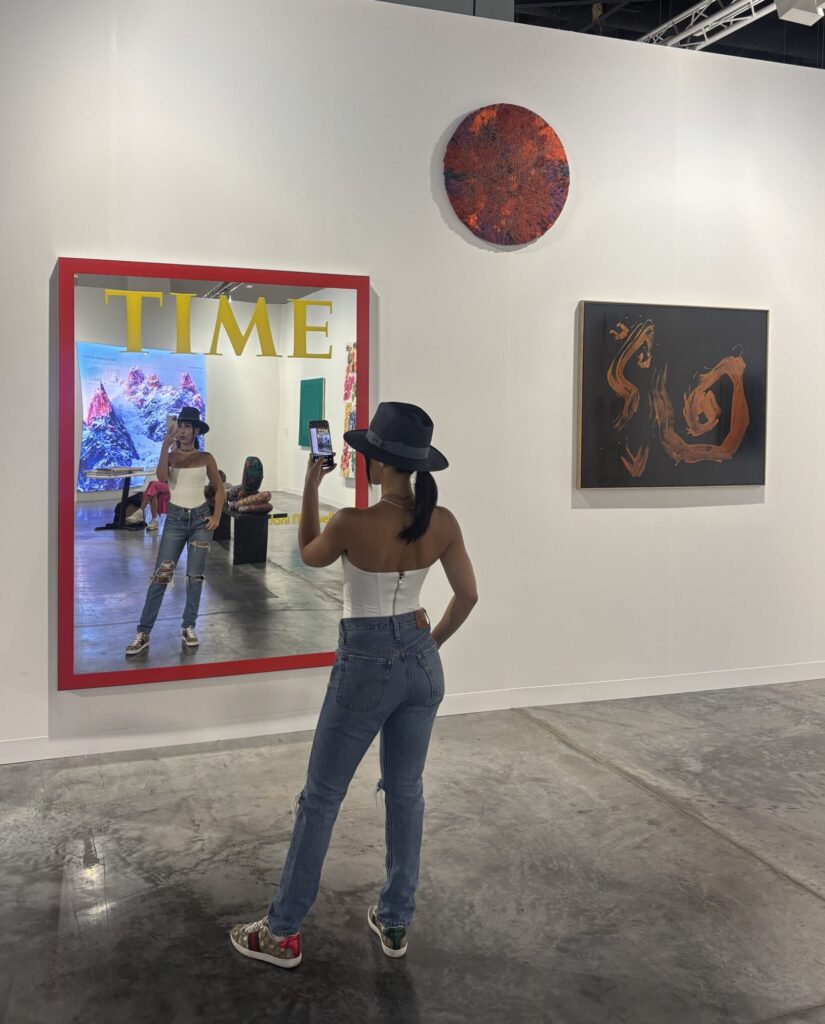
Success comes when brands know exactly which group they’re speaking to, and tailor the activation accordingly. Your collectors crave intellectual clout and exclusivity—they want the VIP preview at Scope, the limited-edition tote, the sense that their presence means something. Your party people, on the other hand, want Instagram clout. They need the proof: the mirror selfie, the neon frame, the viral TikTok.
“Anything reflective? Instant queue, as evidenced by the Time magazine cover mirror in the Convention Center.
Like Narcissus gazing at his reflection, party-set visitors lined up to see themselves in a perfectly-framed Basel moment.”
Georgina Burrows
The Robb Report once again made use of the beautiful Faena penthouse for their two day pop up House of Robb. Ever-popular, queues were out of the door and a one-in, one-out policy operated during most of the live days. The panoramic views at sunset and tightly curated programming made it an experience that lingered long after the house closed.
Elsewhere, IKEA’s Open House injected some much-needed playfulness, but the guest journey felt oddly flat. For a brand famous for leading people through a choreographed maze of living rooms and meatballs, this was a surprising misstep. Check in out here
Closing Thoughts
For creatives, Miami is fuel. It’s a sensory defibrillator: Sunkissed chaos, high-octane colour, the art deco/meets-Baywatch mashup, the warehouse-scale fairs, the relentless search for the “what’s next?”
For aspirational consumer brands, it’s a dream ecosystem. Big spenders, luxury lovers and influencers all swimming together, ready to engage and amplify your presence. But it also reveals a truth brands marketers should be wary of: You can turn heads all day long, but to move hearts, you need creativity. You need meaning.
When art world’s sharpest minds and brand world’s biggest budgets collide, the winners are those who blend style and substance to create something magical.